
Zagreb City Museum, Zagreb


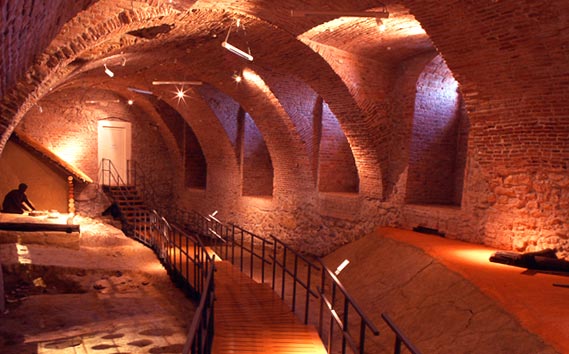


Zagreb City Museum is like museum of a city which has been for centuries cultural, spiritual and administrative centre of Kaikavian kingdom Slavonia also a museum of Kaikavian history.
The city of Zagreb is mentioned for the 1st. when Hungarian king Ladislaus I founded the Zagorye bishopric in 1094. He inherited kingdoms of Croatia in South and Kingdom of S(c)lavonia in North, calling it Slavonia orszag. The Kingdom Slavonia is the successor kingdom of famous Duke Ljudevit's country known as Pannonia Inferior in 8th century, which dissapeard from the lights of history after Hungarians arrived in 9th and 10th century. However, the new bishopric corresponds with Ljudevit's Pannonia Inferior, and according to linguists Kaikavian was a distinguised dialect already in 8th century in Pannonia Inferior, so this early Kaikavian culture and the language did not dissapear. So Hungarians continued to keep this land under the name of Slavonia, whereas Croatia was South from so called Iron Alps (Gvozd). For a new bishop in Zagreb a Czech with name Duh was proclaimed, probably because Czech and early Kaikavian was similar (even today it is).
This is what historial written sources tell us about Zagreb and Slavonian/Kaikavian land. You will not hear much about Kaikavian Slavonia in the Museum of Zagreb, which is bit strange that it does not keep to valid sources, at the same time presenting the history.
However, the history of Zagreb is for the biggest part the history of Kaikavians, until the late 19th century, when the "southern dialect" from Monte Negro/Eastern Herzegowina was proclaimed to be new official language instead of Kaikavian. Maybe this is the reason why Kaikavian is hardly mentioned in its right context in the museum - despite of the fact there are many books in Kaikavian in the Museum and despite of the fact that some street-shields in the Zagreb upper city still have original Kaikavian names - for cultural-ambiental reasons - you cant hide the 800 years Zagreb history completely.


