
Castles & churches
Castle Konjščina

|
Konjščina
This fortress in Zagorje at Konjščina has kept its medieval charm. It belonged to counts Konjski, who also gave the name to the place. In 1545. the fortress saved the life Nikola Šubić Zrinski in a battle against Turks. The battle was lost, and Nikola Šubić Zrinski fled into the safety of the fortress. ... |
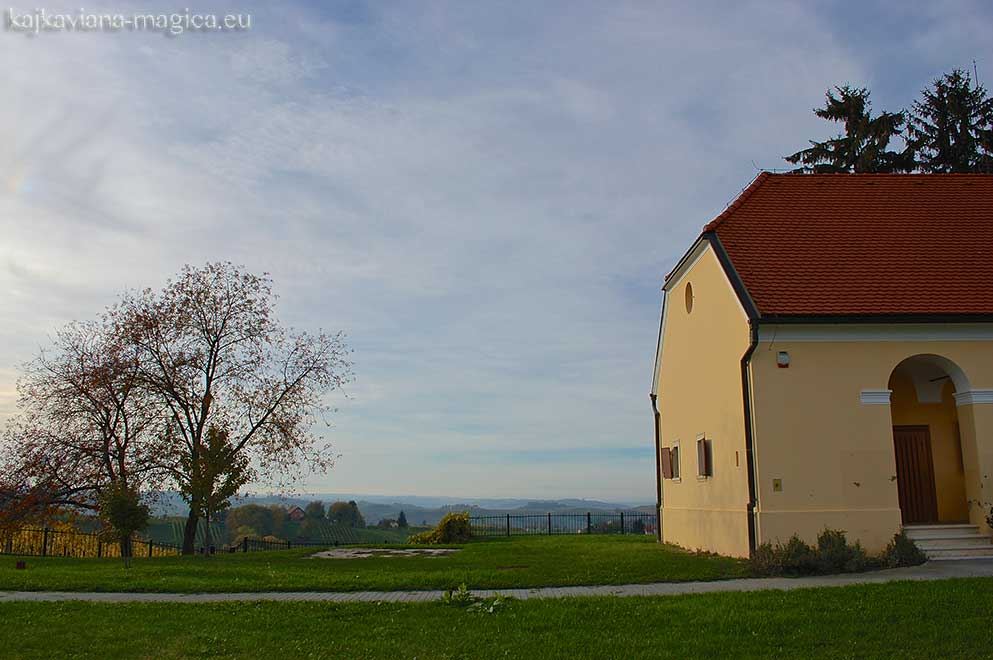
Manor Tkalec
|
Štrigova
Manor Tkalec on the hill above Štrigova was built by Pavlins in the first half of 18th century.. Beautifully renovated, today it is a private property. We recommend also to visit Štrigova, and an easy walk through vineyards (the link on the map just below) to reach the manor. Just next to manor is also the Mađerking breg with one of the most beautiful views over Upper Megymorye. See also: ... |
A vineyard city
|
Štrigova
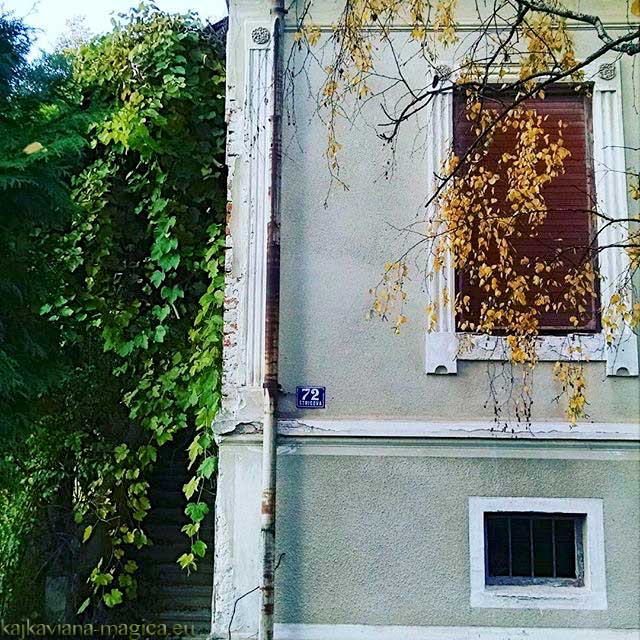
Štrigova was already in Roman times a city called Stridon. It is a very special place in the north of Međimurje. Surrounded by hills and vineyards, it kept even thwo churches, one of which is gothic, but not whole. The old fortress Štrigovčak up on the hill was abandoned or destroyed in times of Zrinski counts, during Turk wars. It is a beautiful small city, starting with gothic architecture, over baroque until Art Nouveau. The magic ambience of Central Europe is created, besides the architectonic heritage, also by many vineyards surrounding the city. ... |
Opeka castle and arboretum

|
Vinica
Beautiful castle Opeka and its arboretum is located in Vinica near Varaždin in Kaikavian region of Zagorye. It once belonged to family of Bombelles, after the WW2 it served as school, and since 1989 it is left to decay. Still, its unique and precious arboretum has kept the romantic feeling. It is a pity that such a cultural heritage is left to decay, and that from 1989 there have been no measures to protect it. A part of the castle has a half-renovated roof, and the other part is left without roof since 1989. It should be a common interest of Varaždin, Zagorye and Croaita to restaurate the castle or at least stop its decay so the Zagorye and Varaždin get a beautiful sight worth seeing. ... |
Holy Mass in Kaikavian literary language
|
Komin
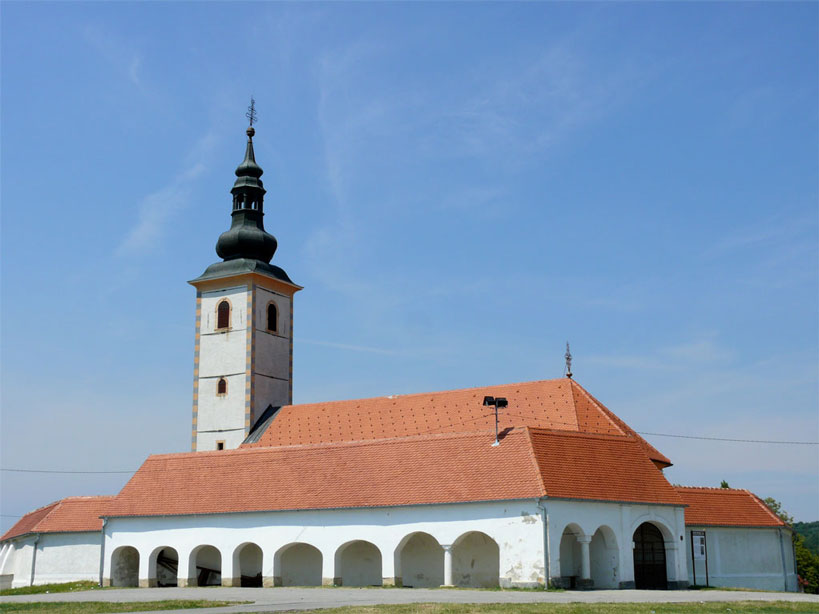
Holy Mass in Kaikavian literary language is held every year in Komin, in the beautifil Church of the Holy Three Kings. Date: 24.5.2015, 19:00 ... |
Early gothic church

|
Gora
Early gothic church was built at the begin of 13th. ct. on the place of romanic church from 12th century. in Gora. Gora was an important centre of Knigts Templar , so the church was built by French masons. Local stone was used. In that times, Gora was in the mideval Kaikavian kingdom of Slavonica or Slovenski orsag. ... |
Little wooden chapel
|
Lijevi Štefanki
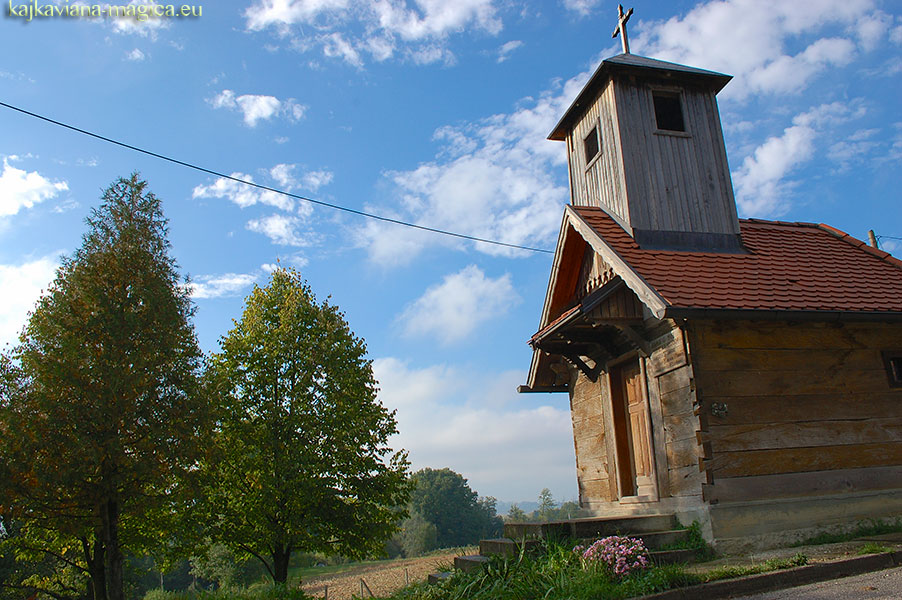
This wooden chapel was made at crossroads in 1913. renovated in 2005. In the village there is bigger and much more famous wooden chapel of St. Georg made in 1627. We did not have time to capture it, but we always return to Turopolje, its romantic oak forests, wineyards and traditional Kaikavian wooden architecture wity joy! ... |
Wooden chapel

|
Lukinić brdo
Wooden chapel on Lukinić brdo was built in 1908. but at its palce there was an earlier chapel built latest in 1662. as the date on the bell says. It is consecrated to St. John the Baptist. ... |
Wooden chapel

|
Lučelnica
Wooden chapel of Holy gost built in 1704. Beatiful view over Turopolje hills - part called Vukomeričke Gorice ... |
Wooden church
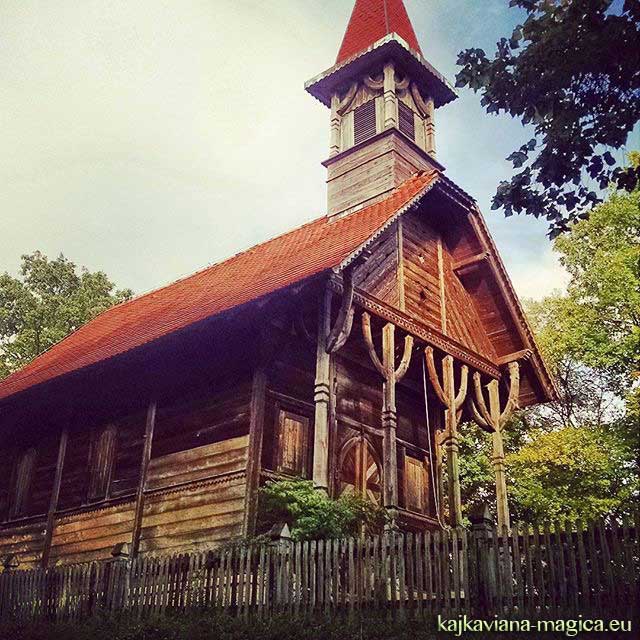
|
Gustelnica
A wooden church hidden in the forest - in Gustelnica next do Dubranec - is a real cathedral made of wood. Fantastic. It has rich history, 1st time mentioned in 1678. In 1759. renovated from the ground, and in 1832. a new one was built from oak. Todays looks were finished in 1888. It was constructed "na žale" (a vertical constuction made of wooden beams), with plans laid in between. ... |
The wooden chapel of St. John the Baptist
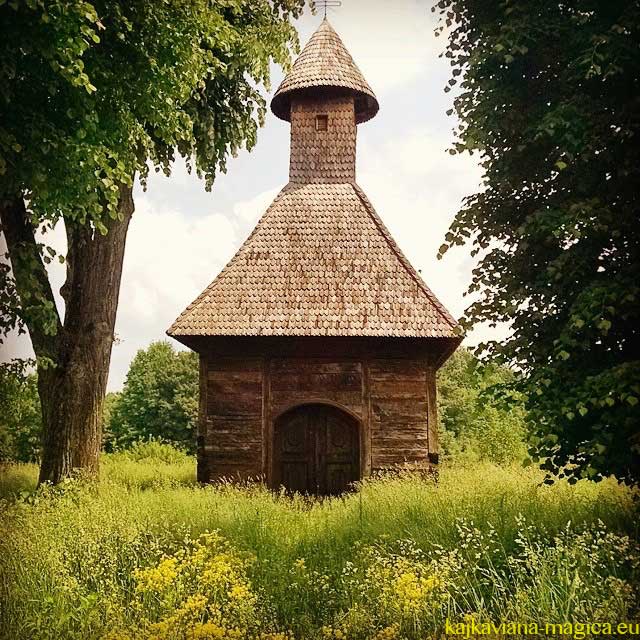
|
Stara Drenčina
This beautiful wooden chapel is located in Stara Drenčina, just before you enter the town of Sisak, above the river Kupa. Nearby there is a fantastic traditonal Kaikavian wooden house. ... |
Church Visitation of blessed virgin Mary
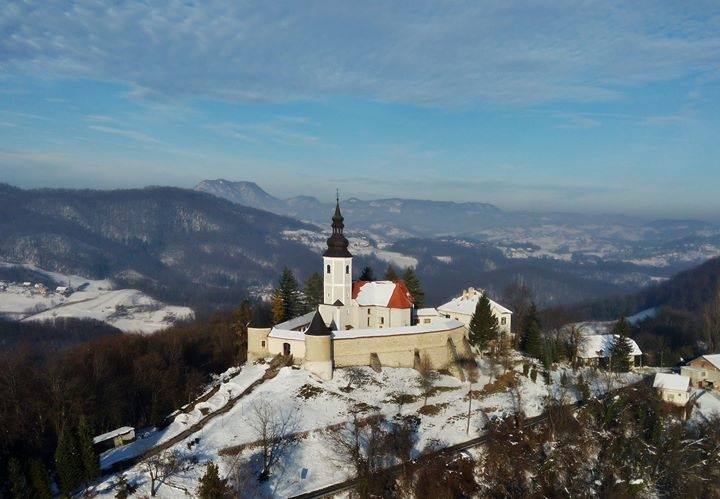
|
Pregrada
The church dedicated to Visitation of blessed virgin Mary is located in Vinagora, in a hilly area that belongs to Pregrada. It's on the hill with a fantastic view which in winter transforms into fairy-world. ... |
Stari Grad

|
Đurđevac
Old City of Djurdjevec was built at the end of 15th century, and is famous for the defence of the fort against the Turks. The legend says that during an exhausting siege of the Turks, the defenders shot their last rooster from the cannon on the Turks, which made them leave in belief defenders were provided with lots of food. ... |
Church Our Lady of the Mountain

|
Lobor
It is a gothic church from the 15h century on a hill above Lobor. It has an unbelievable history, in 9th century there stood a wooden old-Kaikavian church built under Carolingian christinization. But basicallly we can say, from the beggining of the new era, every two to three hundred years a new sacral building was built on this site! The excavations are presented in situ and in a subterranean building. Don't miss this amazing trip through ages of sacral architecture! ... |
Chapel of St. Wolfgang
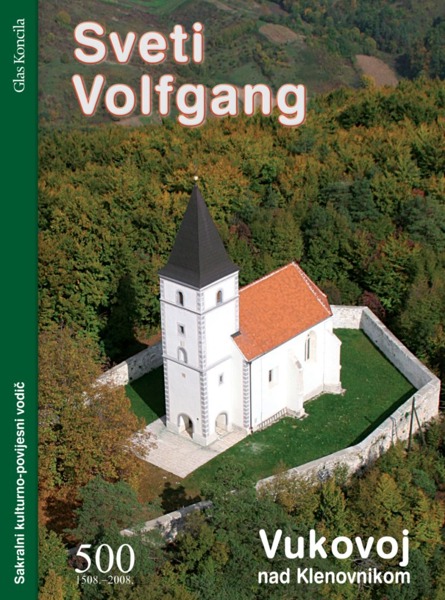
|
Vukovoj
The gothic Chapel of St. Wolfgang is located in Vukovoi over Klenovnik, North of Zagorye. The chapel was built in 1508. St. Wolfgang was a saint from Germany, and is revered in Germany, Austria and Kaikavian region, which always has been within this part of Central Europe. ... |
Remete monastery

|
Zagreb
The Kaikavian name Remete comes from latin eremites, which was how Paulines order was called. Paulines founded in the forest on the hill above Zagreb their monastery in 1272. and the latin word eremites was preserved, which is also one example how we can learn languages like Latin and German through Kaikavian language. Already in 14. century there was a gothic church built, today converted to Baroque. In 16th. century the monastery was hurt in the attack of Turks, and in 18th. ct. the order of Paulines was abolished. ... |
Gothic church

|
Remetinec
This beautiful gothic church in Remetinec at Novi Marof was built by Czech Ian Vitovec, who governed the estates of Celjski counts from Zagorje til Kostajnica in the Kingdom of Slavonia, i.e. todays in Kaikavian region. The gothic church was built in the 2nd half of 15th century. There was a gothic monastery next to church, of which today a small part remains as a rectory (=kaikavian farof). ... |
Kajkaviana Croatica

|
Donja Stubica
The society Kajkaviana has got the most valuable collection of Kaikavian written heritage in whole Kaikavian region. They are located in the beautiful castle Stubički Golubovec. Stubički Golubovec castle is hidden in the forest, beside the road for Donja Stubic, and is surrounded with english gardens. ... |
Bela castle

|
Bela
Bulit in Renaissance with beatiful arboretum, Bela is only located few hundred meters from the newer Bela 2 castle. For sale now. ... |
Bela II

|
Bela
Baroque Bela 2 castle. Unique romantic Zagorje. Where hills touch the valley. ... |
Monastery Svetice
|
Mali Erjavec
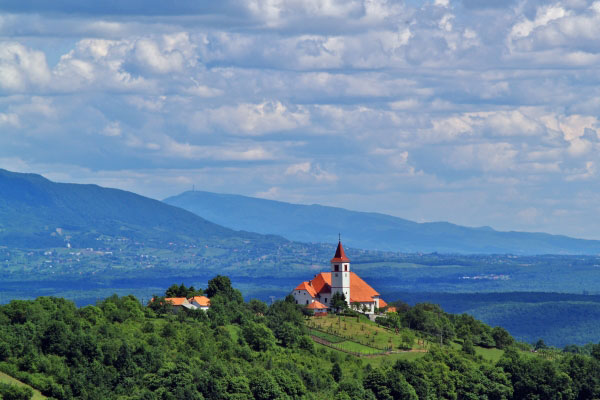
Monastery Svetice near to Ozalj Castle is the place where Paulins' prior Ivan Belostenec wrote in 17th ct. the Kaikavian-Latin dictionary Gazophilacium. Gazophilacium inlcudes also Stokavian and Chakavian words. There is a reprint version available. The original version of dictionary kept in Lepoglava is a protectec cultural good of Croatia. The monastery Svetice is part of the Theme's route On the Paulins' track #1. ... |
Castle Mali Tabor

|
Prišlin
As opposed to its bigger brother castle Veliki Tabor which is a great example of restaurated cultural heritage, Mali Tabor is seriously endangered cultural heritage. Built in 15th. century, it was originally a renaissance castle, through its history it got also early-baroque elements. ... |
Museum of peasant revolt - Castle Oršič
|
Gornja Stubica
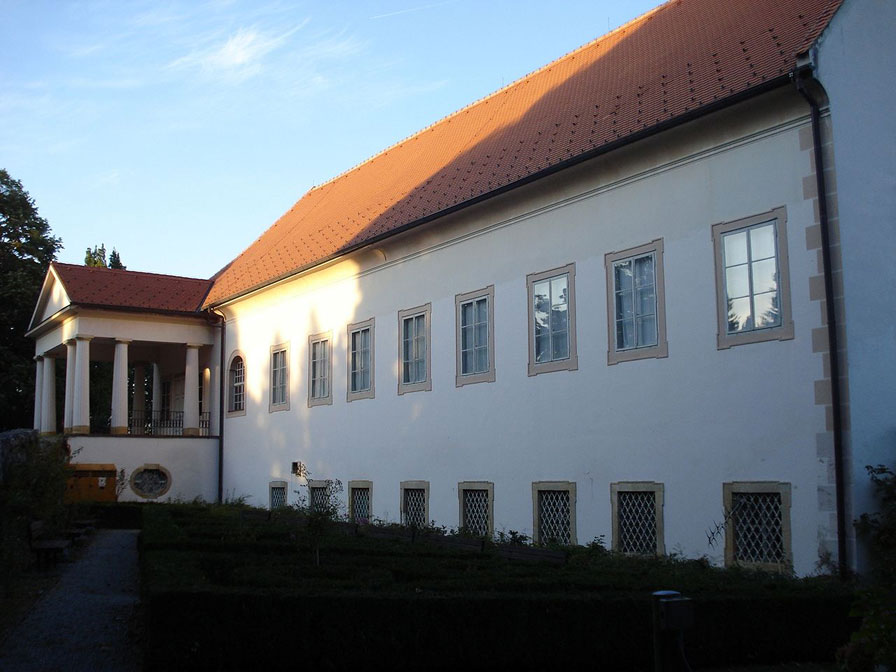
Museum of peasant revolt is located in Zagorje in baroque castle Oršić at Gornja Stubica. In this area we can find a castle every few kilometers, the beautiful castle Oršič is placed on a hill. It invites you to come out of the city hustle and bustle, and enjoy nice cultivated, aristocrate space of a castle and a park, to take a look at the museum collections or just sit on the terrace and enjoy. ... |
Varaždin Baroque Evenings

|
Varaždin
Varaždin Baroque Evenings are held in beautiful authentic spaces like castles and churches in Varaždin but also outside of the city. They explore and present baroque European music, but also present fine arts, literature and gastronomic specialties during grape harvest in Kaikavian region. ... |
Kotoriba

|
Kotoriba
With many beautiful Art Nouveau houses (click here to get them), Kotoriba is also the village of the storks. The author of 1st Kaikavian grammar Ignacius Szentmartoni was from Kotoriba, and here was also the 1st train station in Kaikavian region! ... |
Chapel of St. Helena
|
Šenkovec
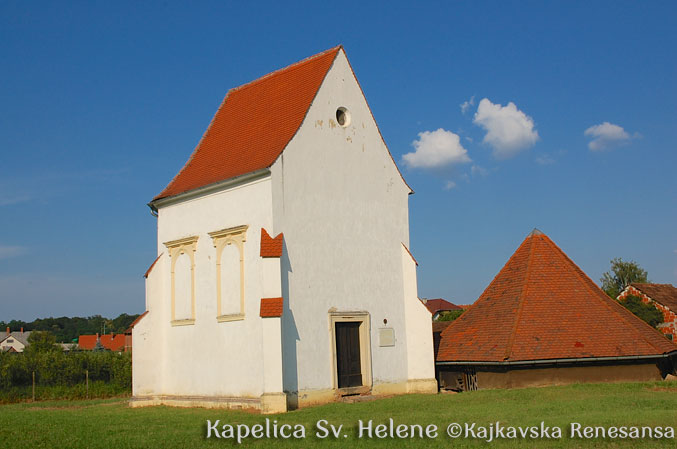
The gothic chapel of St. Helena in Šenkovec has unique cultural and historical value due to its gothic frescos from 2nd half of 14th century. Gothic frescos are rare in North Croatian, Kaikavian cultural region because in Turk-wars a lot of gothic heritage was destroyed. ... |
Ogulin - Renaissance Castle

|
Ogulin
There is an international festival of fairy tales in Ogulin each year, and this manifestation is nicely accompanied by the renaissance castle of Frankopans. It is open to visitors and inside there is a museum now. ... |
Castle Ozalj

|
Ozalj
The begin of castle Ozalj dates into 13th. century, but already in 6th. ct. there were remains of Roman walls. In 17th ct. Ozalj was centre of so called "Ozalj literary circle" to which belonged also nobility Nikola, Petar and Katarina Zrinski and Fran Krsto Frankopan. The basis of Ozalj literary circle was the Kaikavian Ikavian dialect, which at these times was spoken in North Istria, Pokupje, parts of Turopolje and Sutla valley, and partly is still spoken there. ... |
The Old City

|
Sisak
Sisak is one of the oldest cities in Croatia with continuity of settlement. It's names changed from the times of Celtic Segestica, later Roman Siscia, then Kaikavian Sisek from 8. do 19. ct. to finally today's Sisak. Sisek was a capital of a country called in historic sources Lower Panonia, ruled by prince Ljudevit, who was very well known to Franks. Lower Pannonia encompassed the area of later Zagreb Bishopric (also coressponds to kingdom Slavonia in Middle Ages}, meaning the Kaikavian language area. According to linguists Kaikavian language was differentiated from Proto-Slavonic already at the times of Ljudevit, so we can regard Sisek as 1st capital of 1st Kaikavian state. ... |
Castle Trakošćan
|
Trakošćan
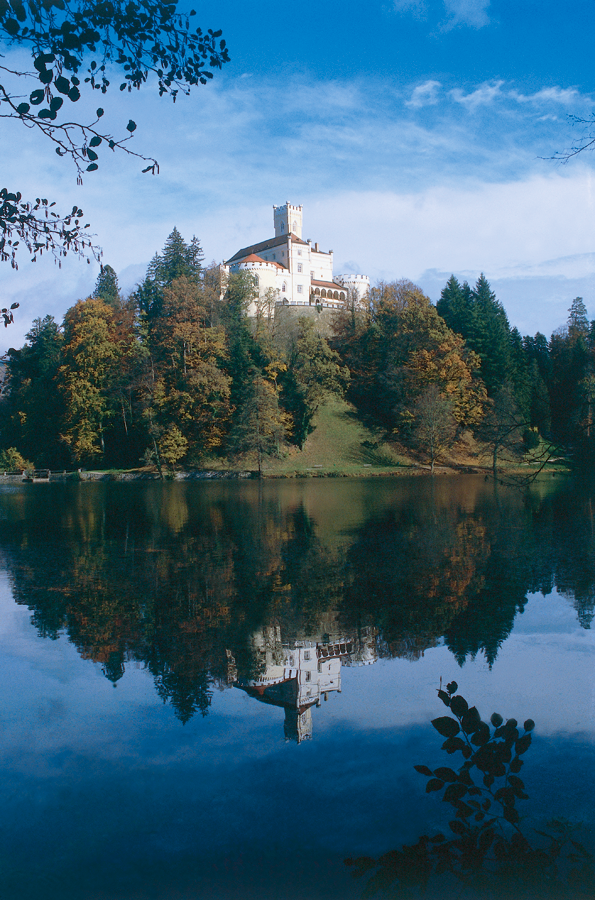
Trakošćan is a castle, but also a castle-museum. Its name probably comes from "Drako-stein/Drachenstein" or "Dragon-stone". Trakošćan preserved a lot of its original furniture and equipment. ... |
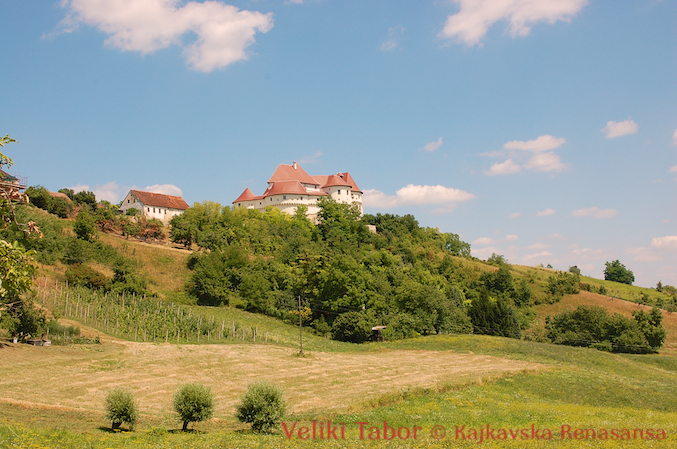
Castle Veliki Tabor
|
Desinić
Beautifully restaurated castle, it offers you unforgetable experience of a Central European castle (original Renaissance ovens & furniture from North Germany) with a view on Zagorye hills. Pictures tell more than words. They offer a guided tour in English and Croatian, and also workshops and plays! ... |
Varaždin

|
Varaždin
What to say about Varaždin, a city that is sung about in Austro-Hungarian operetta (Komm mit nach Warazdin!), a city that was also the capital of Croatia, with beautiful Baroque and Art Nouveau centre? It is a city of Špancirfest, the biggest festival in Kaikavian region, and it is famous for it Baroque evenings. It has a definite spirit of Altösterreich - Old Austria- as some Austrians described it, a feeling you hardly can find in Austria which was despite many old architecture modernized and accelerated. Compared to that, Varaždin remaind slow, although developed. Varaždin is cultural centre of Kaikavian region, where you can watch theatre plays in Kaikavian and enjoy many cultural manifestions like the ones mentioned above. It lacks only in one point - gastronomic offer. Its restaurants are just too classic, too much of the "old school"´. Even if they try hard to present something new. That's why we invite for food to its twin city Čakovec and its higly developed gastronomic scene, the finest in Kaikavian region. Together, Varaždin & Čakovec make a perfect combination of cultural and gastronomic offer. ... |
Picokijada in the Rooster Town

|
Đurđevec
Date: 24.-26.6. 2016 ... |
-


